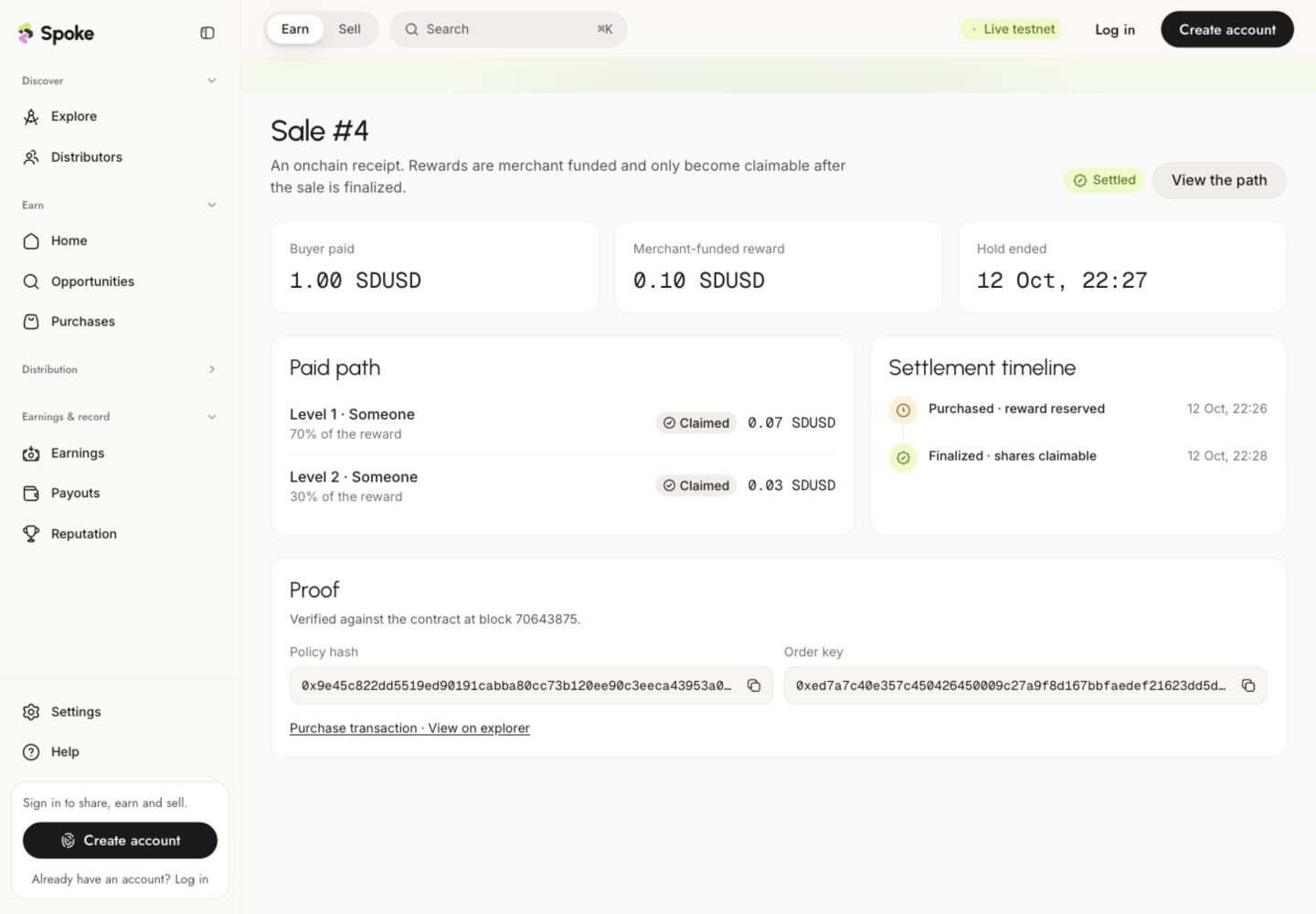
A receipt explains a particular sale. It should answer: what was paid, which campaign accepted it, which policy applied, who was allocated rewards, and what happened after purchase? Use the settled demonstration receipt while reading this guide. It is a real testnet record from a scripted fixture, not customer revenue.
Testnet sale receipt with separate payment and reward amounts, paid path, settlement timeline, and proof

The public receipt separates buyer payment, merchant-funded rewards, allocation claims, and proof.

Read the receipt from top to bottom

Three independent questions

Was the purchase accepted? Find the purchase transaction and sale record on the correct contract. Was the sale finalized or refunded? Read the current sale state and its terminal event. A wallet signature or a local confirmation screen is insufficient. Has this recipient claimed? Inspect allocation/claim data. A finalized sale can have recipients who have claimed and recipients who have not.

Verify through the API

The verification method returns the sale, allocations, policy hash, checked block number, and whether the index matches. Keep chain identity and block metadata alongside the result. If the index is behind, wait for reconciliation rather than treating a partial view as final.

Privacy and sharing

The graph may show Someone when presentation preferences hide an identity. Public chain evidence remains available. Sharing a receipt does not expose a private file by design; delivery requires the authenticated buyer entitlement check.